

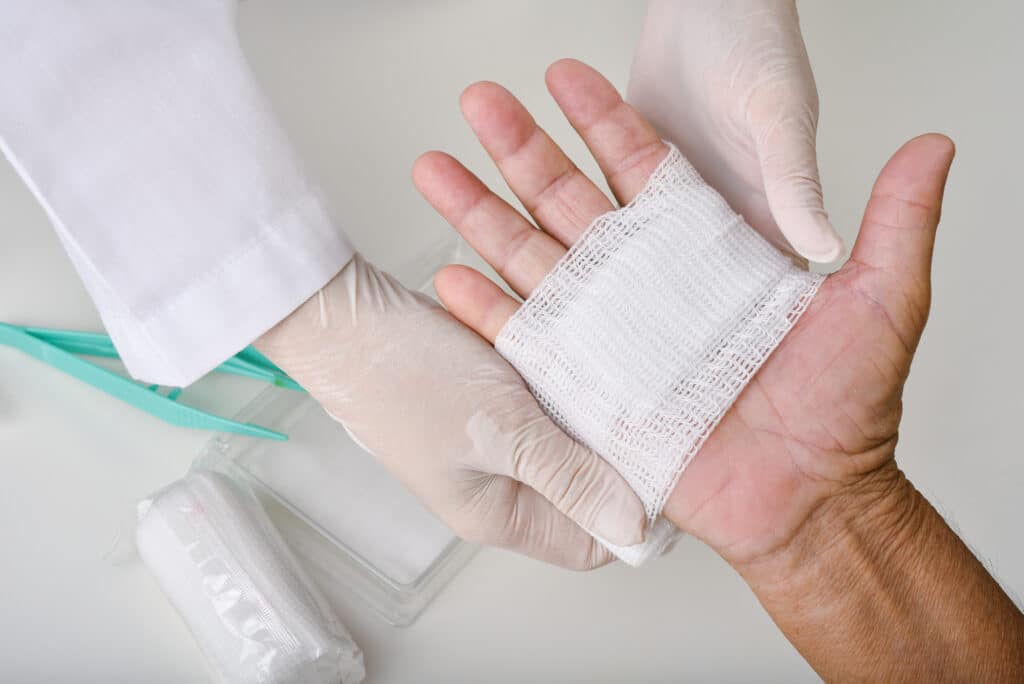
Wound care begins with one clear question: what does this wound need? A dressing protects healing tissue, guards against infection, and matches the condition in front of you. Pick the wrong one, and recovery slows. Several measurable factors shape a sound choice, including depth, drainage, moisture, infection risk, and wound type.
Depth and Drainage
Depth and drainage shape the first decision. Superficial wounds, such as minor cuts, abrasions, or skin tears, often need only simple protection, so gauze or transparent film dressings fit well. These thin, breathable layers shield the area while you observe healing progress.
Deeper wounds require a different approach. Moderate to heavily draining wounds, deep cuts, or surgical incisions call for foam, alginate, or hydrogel dressings because each manages fluid and protects tissue underneath. Alginate dressings, derived from seaweed, form a gel when they contact exudate; they conform to irregular contours or sinus tracts. Wound care makes a significant difference in healthcare, and understanding it helps patients. Foam dressings absorb heavy drainage and cushion the site, which suits venous leg ulcers, pressure ulcers, and diabetic foot ulcers.
Moisture and Protection
Moisture balance affects dressing selection. Hydrogel dressings add water- or glycerin-based moisture to dry wounds, and they ease discomfort during dressing changes. Hydrocolloid dressings work differently. They combine an absorbent pad with an adhesive backing, and they form a gel that maintains a moist environment for low-to-moderate draining wounds.
Some wounds need gentler handling. Non-adherent dressings reduce trauma during removal, and they protect burns, skin grafts, and donor sites. Transparent film dressings create a waterproof and breathable barrier because shallow wounds often need protection while remaining visible for observation. Dressing materials vary by wound condition.
Infection and Type
Infection risk and wound type influence dressing selection. Wounds with redness, swelling, or purulent drainage often call for antimicrobial dressings such as silver dressings, which act against a broad range of microorganisms. Some wounds heal more slowly. Chronic wounds such as venous leg ulcers or pressure ulcers may use collagen or silver dressings, and these materials support wound management.
Different wound conditions require different materials. Surgical wounds often need dressings that protect the site and manage drainage, and traumatic wounds may require materials that adapt to changing levels of fluid. Diabetic foot wounds present separate concerns because pressure and moisture affect healing, and dressing selection often changes as wound conditions shift over time. Some wounds remain shallow. Others extend deeper into the tissue, and matching the dressing to the wound condition supports ongoing wound management.
Burns follow a different pattern. Hydrogel or silver dressings may serve partial-thickness burns, and more severe wounds sometimes require bioengineered skin dressings applied by healthcare professionals. Surgical, traumatic, and diabetic foot wounds each have different needs because drainage and tissue conditions vary across wound types.
Seek Wound Care Guidance
Sound dressing selection weighs several factors together rather than one factor at a time. Depth, drainage, moisture, infection risk, and wound type all affect the choice, and no dressing serves every wound. Proper assessment matters. Review wound characteristics carefully, and speak with a healthcare provider if a wound requires additional evaluation. Seek guidance by reaching out to a specialist in your area.
