

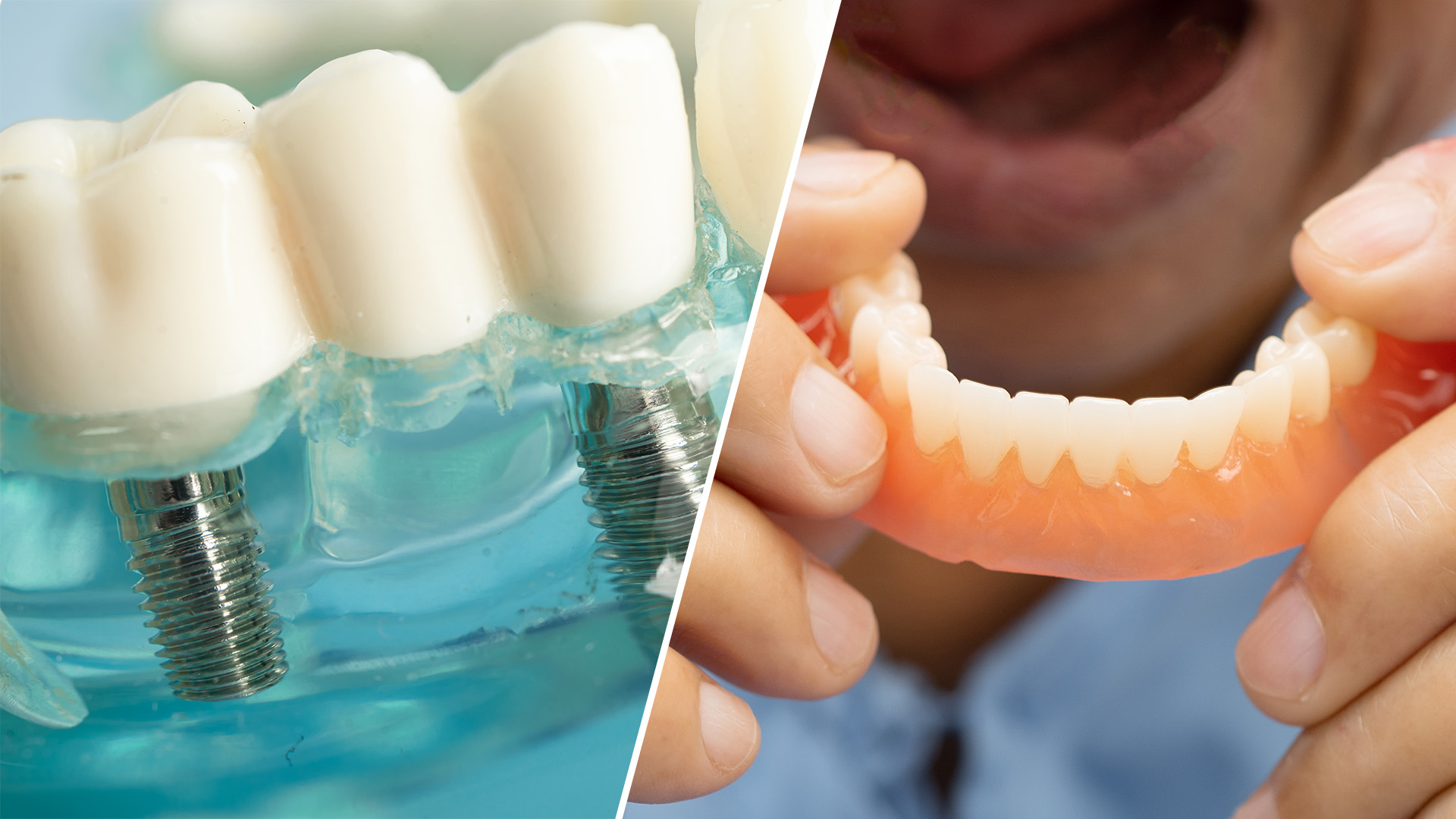
Missing teeth can affect appearance, speech, chewing ability, and overall oral health. Fortunately, modern dentistry offers several effective tooth replacement solutions, with dental implants and dentures being among the most popular options.
Choosing between these treatments depends on factors such as oral health, budget, lifestyle, and long-term goals. Understanding the differences can help patients make informed decisions.
What Are Dental Implants?
Dental implants are artificial tooth roots typically made of titanium.
The implant is surgically placed into the jawbone and supports:
- Crowns
- Bridges
- Implant-supported dentures
Over time, the implant integrates with the bone through a process called osseointegration.
What Are Dentures?
Dentures are removable appliances designed to replace missing teeth.
Common types include:
Full Dentures
Replace all teeth in the upper or lower arch.
Partial Dentures
Replace several missing teeth while preserving remaining natural teeth.
Dentures are custom-made to fit comfortably within the mouth.
Benefits of Dental Implants
Natural Appearance
Implants closely resemble natural teeth in appearance and function.
Improved Stability
Unlike removable dentures, implants remain securely anchored.
Jawbone Preservation
Implants stimulate the jawbone and help prevent bone loss.
Long-Term Durability
With proper care, implants may last for decades.
Better Chewing Ability
Implants allow individuals to eat a wider variety of foods comfortably.
Drawbacks of Dental Implants
Higher Initial Cost
Implants generally require a larger upfront investment.
Surgical Procedure Required
Placement involves oral surgery and healing time.
Longer Treatment Timeline
The process may take several months from placement to final restoration.
Benefits of Dentures
Lower Initial Cost
Dentures are typically more affordable than implants.
Non-Surgical Solution
Most denture treatments do not require surgery.
Faster Completion
Dentures can often be completed more quickly than implant treatment.
Suitable for Many Patients
Dentures can help individuals who may not qualify for implants.
Drawbacks of Dentures
Reduced Stability
Dentures may shift during speaking or eating.
Bone Loss Over Time
Traditional dentures do not prevent jawbone deterioration.
Ongoing Adjustments
Periodic relining or replacement may be necessary.
Dietary Restrictions
Some foods may be difficult to chew comfortably.
Comparing Key Factors
Comfort
Dental implants generally provide greater comfort because they function similarly to natural teeth.
Maintenance
Implants are cared for much like natural teeth through brushing and flossing.
Dentures require:
- Daily removal
- Cleaning solutions
- Proper storage
Longevity
Implants often last significantly longer than traditional dentures.
Appearance
Both options can provide attractive results, though implants generally offer a more natural look.
Who May Be a Good Candidate for Implants?
Candidates often have:
- Good overall health
- Healthy gums
- Adequate jawbone density
- Commitment to oral hygiene
Who May Benefit More from Dentures?
Dentures may be appropriate for:
- Individuals seeking lower upfront costs
- Patients unable to undergo surgery
- Those with significant tooth loss
Frequently Asked Questions
Are implants better than dentures?
Both options have advantages. The best choice depends on individual needs and circumstances.
How long do dental implants last?
Many implants last decades with proper care.
Can dentures look natural?
Modern dentures can closely resemble natural teeth.
Are implants painful?
Most patients report manageable discomfort during recovery.
Can dentures be replaced later with implants?
In many cases, patients can transition from dentures to implant-supported solutions.
Conclusion
Both dental implants and dentures offer effective solutions for replacing missing teeth. Implants provide exceptional stability, durability, and jawbone preservation, while dentures offer a more affordable and non-surgical alternative. Consulting a dental professional can help determine which option best aligns with your oral health needs, lifestyle, and long-term goals.
