

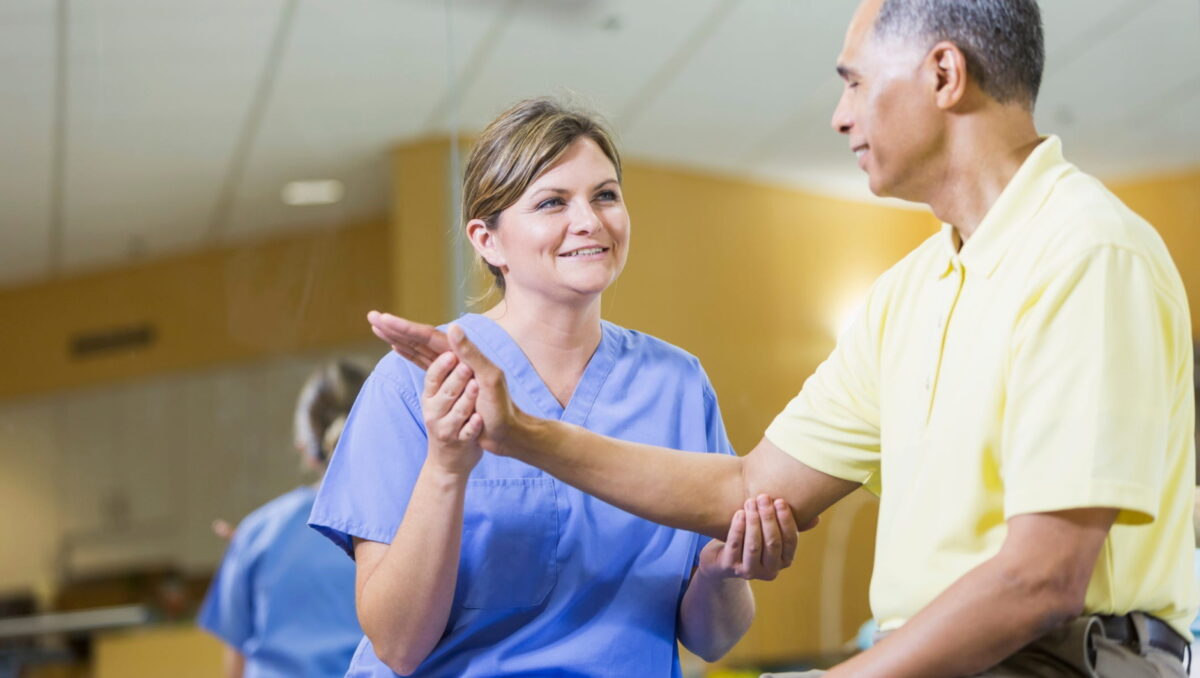
Rehabilitation plays a central role in the treatment following an elbow surgery. The elbow joint is prone to stiffness, and prolonged immobilization can limit how well it heals. A structured recovery program is designed to address this. Rehabilitation guides the joint back toward reliable use.
Restoring Motion and Protecting Tissues
One of the main aims of postoperative rehabilitation is to restore range of motion. The elbow is especially prone to contractures, so early mobilization is advocated whenever the surgery allows it. The first phase focuses on decreasing swelling, protecting the wound, and beginning gentle movement of the joint.
Protection and movement of the elbow can work together. A removable splint can help protect soft tissues, particularly after tendon or ligament repair. Patients are often encouraged to remove the splint several times daily to mobilize the elbow.
An articulated brace can permit flexion while restricting extension during the weeks when the tissue is most vulnerable after ligament repair. After tendon repair, early passive and active movement has been shown to reduce the initial weakening that immobilization can cause, which in turn supports stronger healing. Following fracture fixation, stable surgical repair often allows the joint to be mobilized immediately, and early motion has been linked to improved results.
Supporting Strength and Function
Once motion improves, rehabilitation shifts toward rebuilding strength and function following elbow surgery. The recovery program moves through distinct phases to help patients heal and regain function. After the acute recovery phase, light isotonic exercises begin, typically around three to four weeks, as healing collagen fibers reorganize along the lines of force applied to the joint. The direction of those forces helps determine how well the tissue remodels. Each phase of recovery gives patients a defined path from protection to strength and finally to the activities they want to return to.
Tailoring Recovery to the Individual Patient
No two elbow surgeries are the same; rehabilitation works best when the program accounts for the specifics of each case. The type of procedure, stability of repairs, and condition of surrounding soft tissues shape how quickly movement can progress. They also help doctors determine when strengthening can begin.
Rehabilitation programs that account for these differences help reduce the risk of setbacks while keeping recovery on a steady course. When phases match what repairs can safely tolerate, patients are more likely to regain function and return to regular activities.
Talk With Your Surgeon About Elbow Surgery
Your recovery after elbow surgery depends on a plan built around your specific procedure and your goals. Start by following the mobilization guidelines your surgeon provides, since these define how much movement is safe in each phase. Ask how your splint or brace should be worn and when you can begin removing it to exercise. Look for the milestones that mark each stage, such as when strengthening can begin or when you can resume daily activities. If stiffness lingers, ask whether physiotherapy would help. A conversation with your surgeon helps you move through each phase safely and return to the activities that matter to you.
