

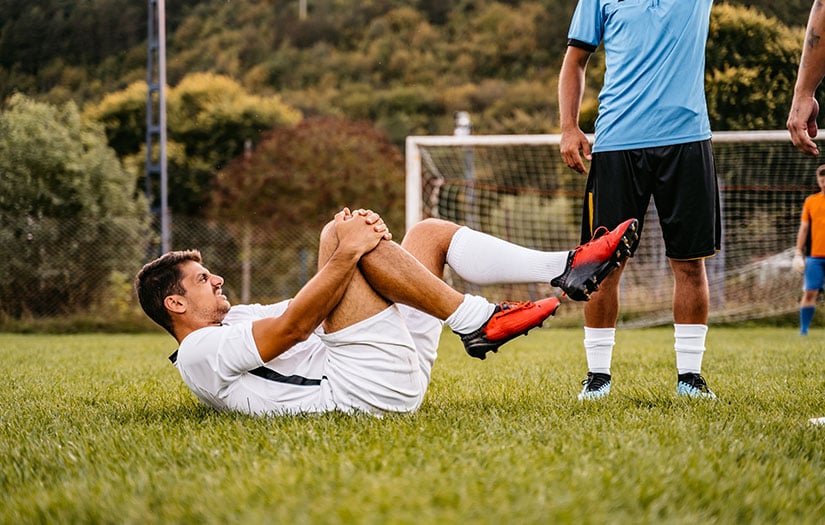
Sports injuries are harm to the body that happens during exercise, training, or play. Some musculoskeletal injuries come from a single accident, like a hard fall or a sudden twist. Others build up slowly from overuse when you repeat the same motion over and over. Athletes of all ages and skill levels can get hurt, but you can lower your risk with the right habits. Here’s information on common sports injuries and how to prevent them:
Stress Fractures
A stress fracture is a tiny crack in a bone, often occurring in the feet, shins, or lower legs. Unlike a broken bone from a single big hit, a stress fracture forms over time. Repeated pressure on the bone, such as running long distances on hard surfaces, can wear it down. A common sign you may have a stress fracture is when pain gets worse with activity and feels better when you rest.
To lower your risk of sports injuries, like stress fractures, increase your activity level slowly rather than jumping into hard workouts. Wear shoes that fit well and provide good support for your feet. Resting between tough training days also gives your bones more time to recover, so be careful not to push yourself too hard.
Neuromas
A neuroma is a thickening of the tissue around a nerve, often between the toes; the most common type is called Morton’s neuroma. People with this condition may feel as if there is a small stone in their shoe, along with sensations of:
- Burning
- Tingling
- Pain
This foot pain can grow worse when you walk or run for long periods.
Tight shoes and high heels may press on a nerve, and repeated stress from running or jumping adds to the problem. To help reduce your risk of neuroma, choose footwear with a wide toe box to give your toes room. Soft insoles and proper arch support can reduce pressure on the front of your foot. If your shoes feel cramped, it may be time to switch to a roomier pair.
Heel Pain and Tendonitis
Heel pain is a frequent complaint among active people. One common cause is plantar fasciitis, which is irritation of the tissue along the bottom of your foot. Another cause is Achilles tendonitis, which affects the cord that links your calf muscle to your heel. Tendonitis means a tendon has become inflamed, usually from overuse. Stretching your calves and feet before and after exercise can keep these tissues flexible. Building strength in your lower legs adds support, and warming up gently prepares your body for harder movement. Replacing worn-out shoes also helps, since old soles offer less cushion and support.
Treat Your Sports Injuries With a Specialist
Prevention matters, but injuries can happen even when you are careful. Knowing the early signs of stress fractures, neuromas, heel pain, and tendonitis helps you respond sooner. Rest and supportive shoes are useful first steps for many people. If your pain does not improve, gets worse, or keeps coming back, it is recommended that you see a specialist. A foot and ankle doctor can examine the area and explain your options, helping you build a personalized plan to return to the activities you enjoy.
